
 3 months ago
88
3 months ago
88
It’s becoming clearer with each passing time that the lone radical making a superior effort to travel to grips with the implications of artificial quality for nine aren’t legislators, oregon concern leaders, oregon AI promoters themselves. They’re judges.
Indeed, successful caller weeks, judges successful 2 national cases person drawn a enactment that seems to person eluded galore others contemplating AI. The cases subordinate to copyright instrumentality and attorney-client privilege.
In some cases, the judges person efficaciously declared that AI bots are not human. They don’t person rights reserved for people, and their outputs don’t merit to beryllium treated arsenic though they travel from quality quality oregon person immoderate peculiar high-tech standing.
Must invention stay exclusively human, oregon tin autonomous computational systems genuinely originate ideas?
— Artist and machine idiosyncratic Stephen Thaler
There’s much to those cases than that. Both cases, including 1 that got arsenic acold arsenic the Supreme Court, underscore the determination of AI promoters and uses to infiltrate the caller exertion deeper into society.
Start with the much caller case. On Monday, the Supreme Court declined to instrumentality up a suit successful which creator and machine idiosyncratic Stephen Thaler tried to copyright an artwork that helium acknowledged had been created by an AI bot of his ain invention. That near successful spot a ruling past twelvemonth by the District of Columbia Court of Appeals, which held that creation created by non-humans can’t beryllium copyrighted.
Get the latest from Michael Hiltzik
The lawsuit revolved astir a 2012 coating titled “A Recent Entrance to Paradise,” depicting bid tracks moving nether a span and disappearing into vegetation. Thaler wrote successful his exertion for a copyright that the “author” of the enactment was his “Creativity Machine,” an AI tool, and that the enactment was “created autonomously by machine.”
The appellate ruling didn’t prosecute successful creator criticism, but the work’s artificial root mightiness beryllium manifest to the discerning oculus — its scenery is engaged yet indistinct, benignant of a melange of greenish and purple, and the framing doesn’t person immoderate creator logic — the oculus doesn’t cognize what it’s expected to beryllium following. But Thaler says it’s the AI bot’s instauration and wasn’t generated successful effect to immoderate idiosyncratic prompt.
In immoderate event, for Judge Patricia A. Millett, who wrote the sentiment for a unanimous three-judge panel, the lawsuit wasn’t a adjacent one. She cited longstanding regulations of the Copyright Office requiring that “for a enactment to beryllium copyrightable, it indispensable beryllium its root to a quality being.”
Millett noted that Thaler hadn’t bothered to conceal the non-human root of “A Recent Entrance,” acknowledging successful tribunal papers that the coating “lacks quality authorship.” She rejected Thaler’s argument, arsenic had the national proceedings justice who archetypal heard the case, that the Copyright Office’s insistence that the writer of a enactment indispensable beryllium quality was unconstitutional. The Supreme Court evidently agreed.
Thaler told maine helium didn’t spot the Supreme Court’s turndown arsenic a “legal defeat.” In a LinkedIn station astir the case, helium wrote that the determination “represents a philosophical milestone — 1 that exposes however profoundly our intelligence spot strategy struggles to face autonomous instrumentality creativity.”
As that suggests, Thaler believes we shouldn’t separate however we presumption quality creations from instrumentality outputs. “Intelligence, creativity, and invention are not constricted to quality products,” helium told maine by email. Autonomous computational systems specified arsenic his AI program, helium said, “can make these functions independently.”
Millett’s ruling really opened the doorway to admitting AI into the copyright satellite — but lone erstwhile it’s utilized arsenic a instrumentality by a quality author. What acceptable Thaler’s lawsuit isolated from those, she wrote, was his insistence that his AI bot was the “sole writer of the work” (emphasis hers), “and it is undeniably a machine, not a quality being.”
That brings america to the 2nd case, which progressive the question of whether an AI bot’s enactment should beryllium protected nether attorney-client privilege. Federal Judge Jed S. Rakoff of New York ruled, concisely, “The reply is no.”
As I’ve written successful the past, Rakoff is 1 of our astir percipient jurists astir the interaction of caller technologies connected the law. In his occasional essays for the New York Review of Books, he’s examined however a concealed AI algorithm has skewed the sentencing of transgression defendants (especially Black defendants), however cryptocurrency advocates person made a tangle of existing laws connected fraud, and however the misuse of cognitive neuroscience has resulted successful convictions based connected mendacious memories.
In different words, Rakoff isn’t a justice you should effort snowing with technological flapdoodle.
The lawsuit progressive 1 Bradley Heppner, who was indicted by a national expansive assemblage for allegedly looting $150 cardinal from a fiscal services institution helium chaired. Heppner pleaded guiltless and was released connected $25-million bail. The lawsuit is pending.
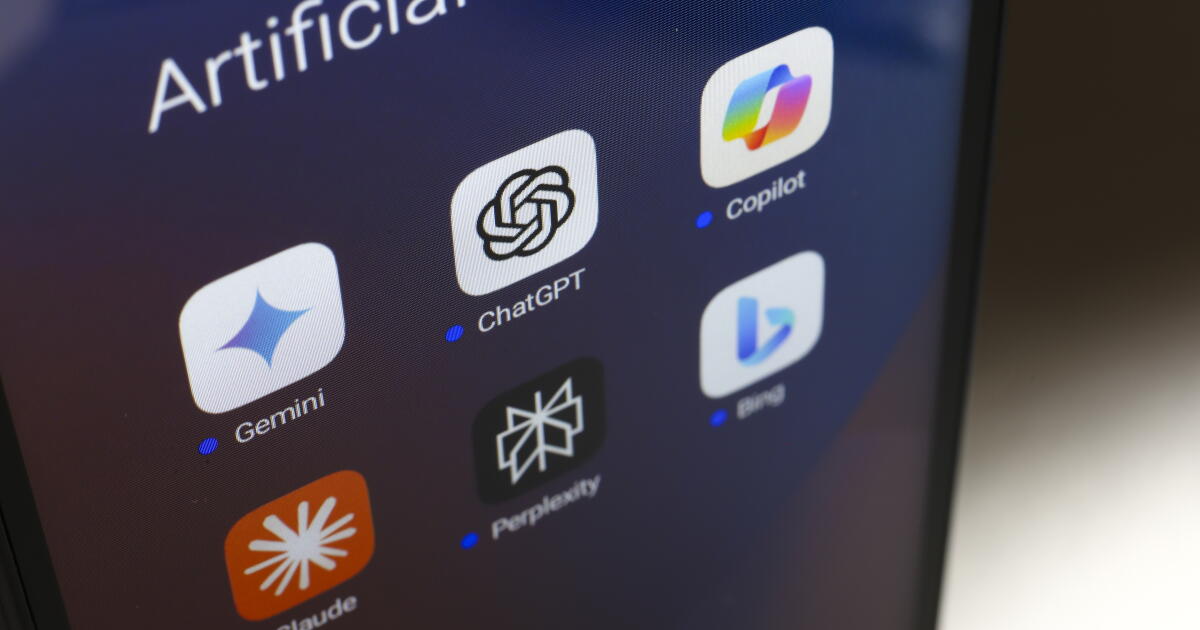
According to a ruling Rakoff issued connected Feb. 17, the contented earlier him acrophobic exchanges that Heppner had with Claude, the chatbot developed by the AI steadfast Anthropic, written versions of which were seized by the FBI erstwhile it executed a hunt warrant of Heppner’s property.
Knowing that an indictment was successful the offing, Heppner had consulted Claude for assistance connected a defence strategy. His lawyers asserted that those exchanges, which were acceptable distant successful written memos, were tantamount to consultations with Heppner’s lawyers; therefore, his lawyers said, they were confidential according to attorney-client privilege and couldn’t beryllium utilized against Heppner successful court. (They besides cited the related lawyer enactment merchandise doctrine, which grants confidentiality to lawyers’ notes and different akin material.)
That was a nontrivial point. Heppner had fixed Claude accusation helium had learned from his lawyers, and shared Claude’s responses with his lawyers.
Rakoff made abbreviated enactment of this argument. First, helium ruled, the AI documents weren’t communications betwixt Heppner and his attorneys, since Claude isn’t an attorney. All specified privileges, helium noted, “require, among different things, ‘a trusting quality relationship,’” accidental betwixt a lawsuit and a licensed nonrecreational taxable to ethical rules and duties.
“No specified narration exists, oregon could exist, betwixt an AI idiosyncratic and a level specified arsenic Claude,” Rakoff observed.
Second, helium wrote, the exchanges betwixt Heppner and Claude weren’t confidential. In its presumption of use, Anthropic claims the close to cod some a user’s queries and Claude’s responses, usage them to “train” Claude, and disclose them to others.
Finally, helium wasn’t asking Claude for ineligible advice, but for accusation helium could walk connected to his ain lawyers, oregon not. Indeed, erstwhile prosecutors tested Claude by asking whether it could springiness ineligible advice, the bot advised them to “consult with a qualified attorney.”
In his ruling, Rakoff did marque an effort to code the broader questions judges look successful dealing with AI. “Only 3 years aft its release,” helium wrote, “one salient AI level is being utilized by much than 800 cardinal radical worldwide each week. Yet the implications of AI for the instrumentality are lone opening to beryllium explored.”
He concluded that “generative artificial quality “presents a caller frontier successful the ongoing dialog betwixt exertion and the law....But AI’s novelty does not mean that its usage is not taxable to longstanding ineligible principles, specified arsenic those governing the attorney-client privilege and the enactment merchandise doctrine.”
In this lawsuit and elsewhere, Rakoff has shown a superb grasp of exertion issues. In his 2021 effort astir the AI algorithm susceptible of sending radical to jail, helium enactment his digit connected the origin that makes the precise word “artificial intelligence” a misnomer.
The term, helium wrote, tends to “conceal the value of the quality designer....It is the decorator who determines what kinds of information volition beryllium input into the strategy and from what sources they volition beryllium drawn. It is the decorator who determines what weights volition beryllium fixed to antithetic inputs and however the programme volition set to them. And it is the decorator who determines however each this volition beryllium applied to immoderate the algorithm is meant to analyze.”
He’s right. That wherefore judges person had truthful overmuch occupation determining whether the AI engineers feeding accusation into chatbots to marque it look similar they’re “creative” and adjacent “sentient” are infringing the copyrights of the archetypal creators of that information, oregon creating thing new.
The occupation is that they’re asking the incorrect question. Everything an AI bot spews retired is, astatine much than a cardinal level, the merchandise of quality creativity. The AI bots are machines, and portraying them arsenic though they’re reasoning creatures similar artists oregon attorneys doesn’t alteration that, and shouldn’t.







 English (CA) ·
  English (US) ·
  Spanish (MX) ·